

Introduction
For companies that import, the foreign trade scenario is dynamic and challenging. Depending on the sector, the country of origin, the customs regime and logistical conditions, small failures can lead to delays, additional costs or even reputational impacts. This article addresses structured practices that help reduce uncertainty, improve predictability and increase competitiveness in the import process. The focus is on guiding operations, purchasing, finance and compliance teams, aligning governance, documentation, logistics and risk management. By adopting a well-defined import flow, companies are able to turn complexity into a competitive advantage, from initial planning to delivery at the final destination. Building an efficient import program involves technology, reliable partners and a culture of continuous improvement. Throughout the text, we present practical guidelines, without relying on specific numerical data, for each company to adapt according to its volume, niche and target markets.
Development
Supply Chain Governance and Strategic Planning
Efficient governance starts with a clear definition of roles, responsibilities and decision flows. Companies that import must map out the complete cycle from procurement to delivery, with well-defined control points for selecting suppliers, approving contracts, managing risks and approving budgets. Strategic planning involves aligning demand, receiving capacity, stock and availability of inputs with delivery times from international suppliers. It is useful to establish a cadence for reviewing contracts, partner performance indicators and contingency plans for common scenarios such as exchange rate variations, logistical delays or regulatory changes. Communication between purchasing, operations, finance and compliance creates a single front line for quick decisions, reduces rework and increases predictability. In addition, a simple governance program should focus on accessible data, recording decisions and periodic reviews so that continuous improvement is practical and measurable.
Documentation, Tariff Classification and Customs Compliance
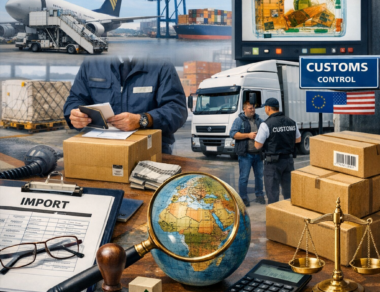
Proper documentation is the backbone of efficient importing. Control begins with the correct tariff classification, which impacts taxes, quotas and special regimes. Next, the basic set of documents - commercial invoice, packing list, certificate of origin and transport documentation - needs to be complete, accurate and available for quick reference. The distinction between proforma invoices, commercial invoices and shipping notes must be clear to avoid rework during clearance. Customs compliance involves following import regimes, rules of origin, licenses and certifications when required by the product. Keeping audit trails, inspection records and proof of compliance facilitates audits, reduces risks of downtime and strengthens financial governance. The aim is to have a document flow that minimizes doubts at customs, guarantees traceability and is scalable as the volume of imports increases.
International Logistics: Modalities, Incoterms and Cost Flows
In international logistics, the choice of modal and the contractual framework define responsibilities, risks and costs. The decision between sea, air, road or multimodal depends on the nature of the goods, the urgency of delivery, cost sensitivity and packaging requirements. Understanding the up-to-date Incoterms is crucial to clarify who pays for freight, insurance, taxes and which steps are the responsibility of the seller or the buyer. For companies that import, aligning Incoterms with the supply chain strategy helps to predict freight, customs and warehousing disbursements, as well as to plan for receiving capacity at the destination. In addition, the flow of costs needs to be mapped from order to unloading, including international freight, insurance, handling, clearance fees and internal transportation costs to the final destination. The selection of logistics partners should prioritize visibility, reliability and data governance practices. Segmenting cargo by risk or criticality categories facilitates the application of appropriate controls and continuous improvement in the total cost of the operation.
Risk Management, Quality and Supplier Relations
Import risk management involves identifying vulnerabilities that could affect cost, time or compliance. Exchange rate variations, interruptions in the supply chain, dependence on single suppliers or quality issues are common examples. Import companies should adopt a simple risk assessment framework with responsible parties, severity criteria and short-term mitigation plans. Carrying out due diligence on suppliers, monitoring performance indicators and maintaining contracts with quality clauses, deadlines and guarantees strengthen the chain's resilience. Monitoring quality during reception, checking goods and taking swift corrective action prevents non-conforming items from entering. Building stable relationships with key suppliers, promoting continuous improvement and maintaining open channels of communication between purchasing, quality, operations and compliance increases the predictability of deliveries and reduces surprises. In addition, risk management should consider appropriate payment terms, the use of financial instruments when necessary and protection against default or operational losses.
Conclusion
In short, companies that import gain an advantage by transforming regulatory and logistical complexity into a predictable flow, supported by clear governance, robust documentation, well-aligned logistics operations and proactive risk management. The key is not just to comply with rules, but to create an ecosystem that allows quick decisions to be made, based on accessible data and standardized processes. Investing in training, standardized procedures and reliable partners results in reduced rework, shorter clearance times and greater cost efficiency. A culture of continuous improvement, combined with simple performance metrics, makes it easier to make decisions and adjust to market changes. Success in importing, therefore, depends on an integrated vision between areas and a set of controls that protect the company from economic fluctuations and interruptions in the supply chain. This text offers a conceptual map for starting or revitalizing the import program, adapting it to the size of the company, the types of products and the markets served. By aligning people, processes and systems, importing companies build more agile, reliable and competitive operations on the global stage.